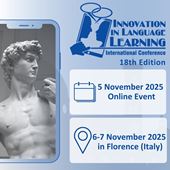
Innovation in Language Learning


Teaching to Impact: Making Learning Visible
Ana Gabriela Hernández-Salazar, Instituto Tecnológico de Costa Rica (Costa Rica)
Abstract
Many English language educators spend their careers questioning their teaching methodologies and assessment strategies, often assuming that planning and delivering "good" lessons is sufficient to achieve desired learning outcomes. However, traditional assessment frameworks frequently fail to evaluate student agency and actual linguistic impact, particularly within Global Englishes Language Teaching (GELT) contexts where native-speaker norms are increasingly challenged. Visible Learning (Hattie, 2009) provides an evidence-based framework promoting self-awareness in teaching—allowing educators to see learning through their students' eyes and empowering learners to become their own teachers. By integrating Visible Learning principles within GELT classrooms, educators can employ tools such as formative self-assessment rubrics, goal-setting tasks, Thinking Routines (Project Zero, n.d.), and reflective feedback loops focused on communicative success rather than native-like accuracy. This presentation explores how making learning visible enables students to track their growth as competent, global English users, fostering linguistic confidence and self-regulated learning in diverse ELT settings.
Keywords: Global Englishes Language Teaching, Visible Learning, Thinking Routines, Formative Assessment, Learner Autonomy.
REFERENCES
[1] Hattie, J. (2009). Visible learning: A synthesis of over 800 meta-analyses relating to achievement. Routledge.
[2] Project Zero. (n.d.). Thinking routines toolbox. Harvard Graduate School of Education. https://www.pz.harvard.edu/thinking-routines